Mechanical Design & SOLIDWORKS CAD
Develop parts, assemblies, mechanisms, interfaces, materials, tolerances, drawings, BOMs, and release-ready design documentation.
MECHANICAL PRODUCT DEVELOPMENT / GREENVILLE, SC + REMOTE
Mechanical product-development support connecting design, simulation, risk analysis, and physical testing.
Eliant helps turn early concepts, existing CAD, design problems, and prototype questions into clear mechanical designs, analysis-backed decisions, and practical next steps toward release.
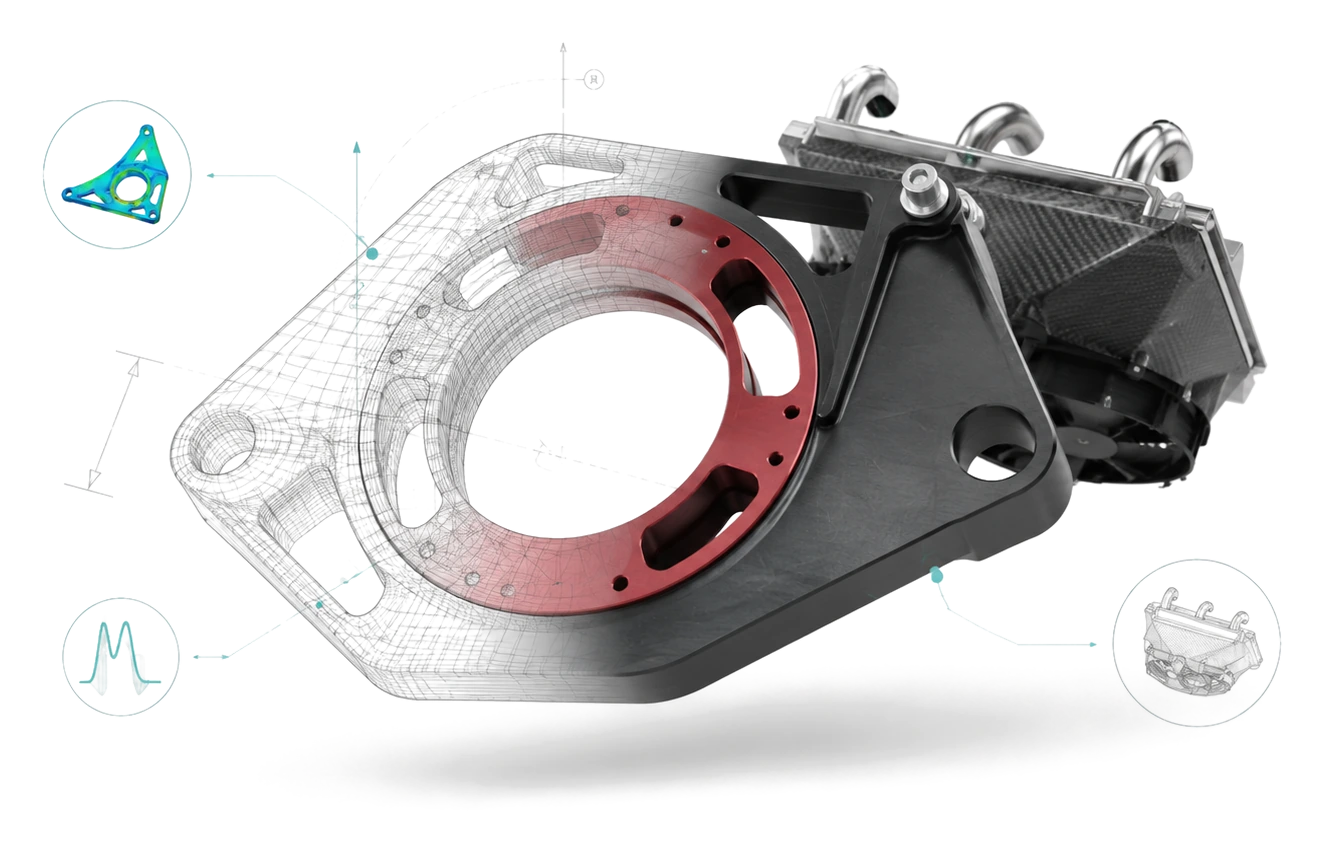
Engineering Philosophy
Good engineering asks more: Where does the load go? How could the product fail? What should be tested? What evidence will support the decision?
Eliant connects design intent, analysis, failure-mode thinking, and physical evidence so mechanical decisions are easier to trust.
Capabilities
Eliant can solve a focused technical problem or stay involved through mechanical design, analysis, verification, and release.
Develop parts, assemblies, mechanisms, interfaces, materials, tolerances, drawings, BOMs, and release-ready design documentation.
Structural FEA for static strength, fatigue, buckling, natural frequencies, thermal behavior, and appropriate drop-test questions--with documented assumptions, limitations, and design recommendations.
Identify potential failure modes, prioritize design risk, define practical actions, and connect important risks to verification evidence.
Develop test plans, procedures, fixtures, measurements, and acceptance criteria. Perform suitable testing where scope and equipment allow, or coordinate outside quotes when specialized resources are required.
Support DFM/DFA reviews, prototype builds, supplier questions, design changes, issue resolution, and production release.
Eliant uses SOLIDWORKS Simulation Professional to evaluate linear structural response, fatigue risk, buckling behavior, natural frequencies and mode shapes, heat transfer, thermal loading, and appropriate drop-impact conditions.
The analysis method is selected around the product, loading, material behavior, contacts, boundary conditions, and decision being made.
Simulation supports engineering decisions and depends on appropriate inputs, assumptions, boundary conditions, and model idealization. Physical testing and independent review requirements are established according to project risk and intended use.
Process
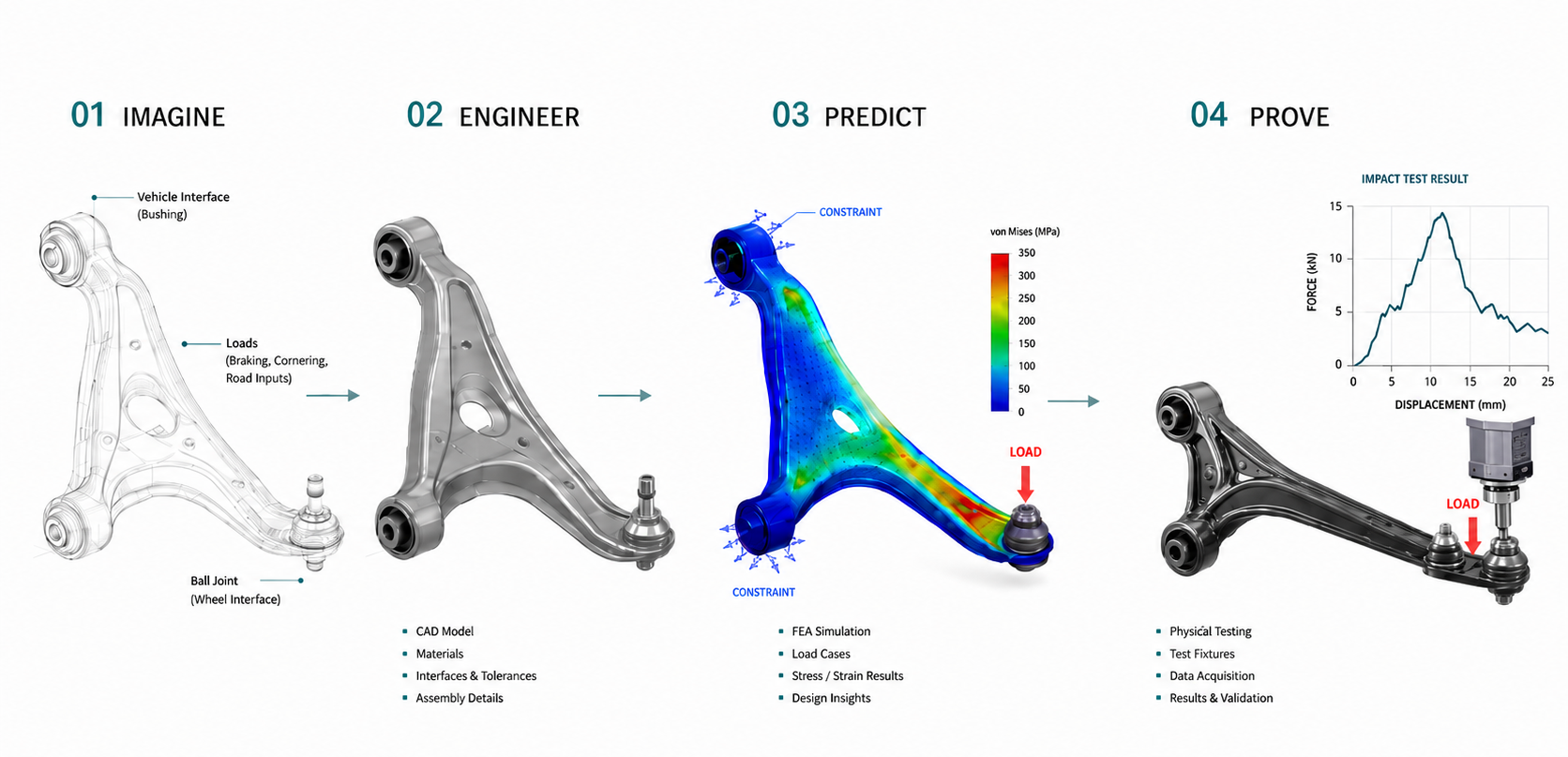
Define what the product must do, where it will be used, what it connects to, and what conditions it must survive.
Develop the geometry, materials, interfaces, tolerances, assemblies, drawings, and manufacturable details.
Use engineering calculations, FEA, and DFMEA to understand load paths, sensitivities, and potential failure modes before committing to hardware.
Plan verification, support prototypes, perform suitable testing, coordinate specialized outside testing when required, and apply the results to the next design decision.
Deliverables
Each project is scoped around the decision that needs to be made. Deliverables are selected to support the work, not to overload the project.
About Eliant
Eliant provides mechanical product-development support for teams that need additional engineering capacity or a structured path through a difficult design problem. Work is organized around clear requirements, documented assumptions, risk-based decisions, and usable technical deliverables.
Support may address a focused engineering question or continue through mechanical design, CAD, analysis, DFMEA, verification planning, prototype testing, design updates, and release.
Objectives, inputs, responsibilities, assumptions, and deliverables are established before substantial work begins.
Design recommendations are connected to requirements, analysis, identified risks, test evidence, and documented engineering judgment.
Deliverables are prepared so customers, suppliers, test providers, and engineering teams can act on them.
Contact
Start with the product stage, the technical problem, and the result you need. Eliant can help define a focused next step.